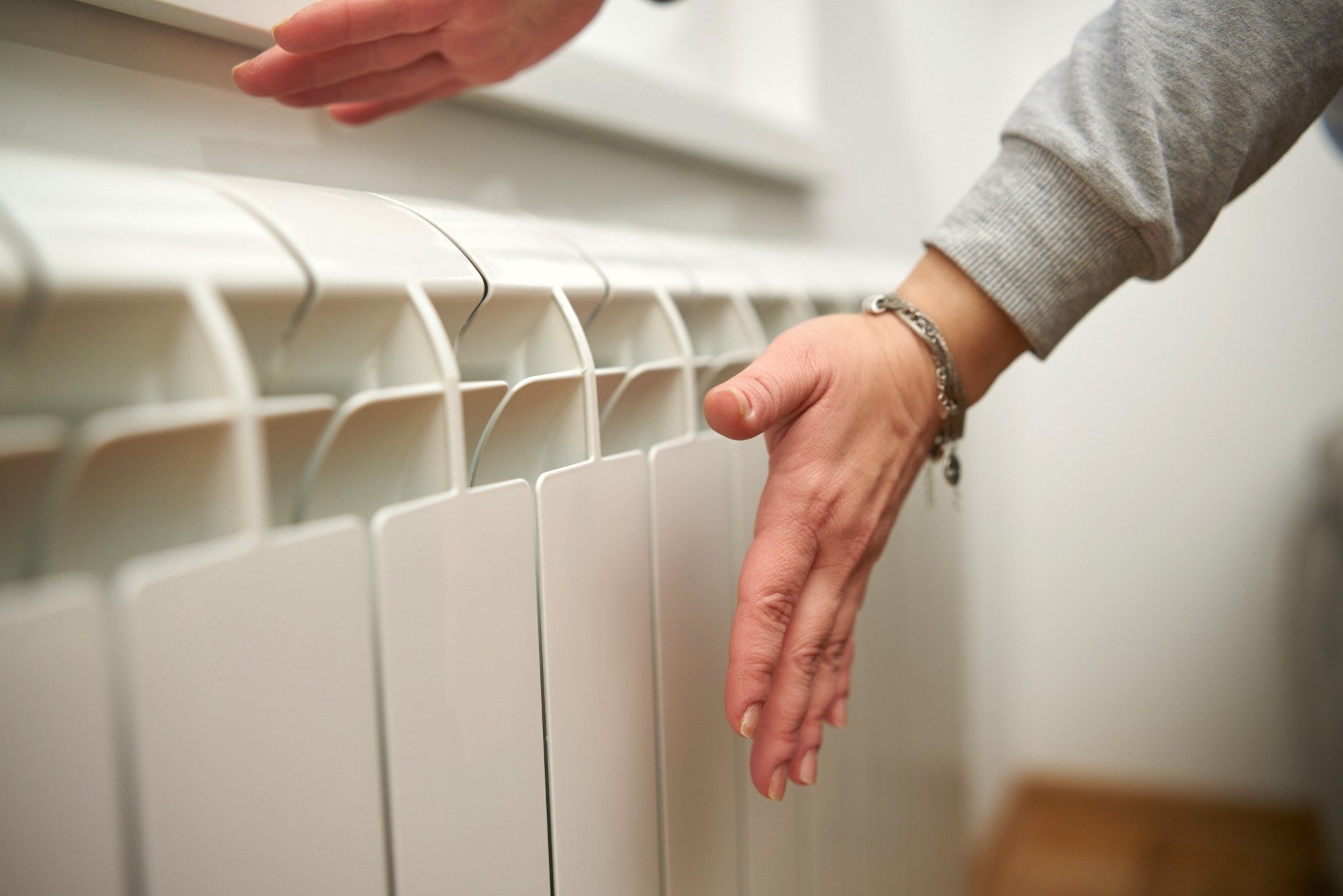
There’s nothing more jarring on a cold day than expecting a wave of warmth and getting a blast of chilly air instead. When your furnace blows cold air, it’s easy to assume the worst. But before you panic, know that the reason your furnace blows cold is often a simple issue you can fix yourself.
We’ll walk through some basic furnace troubleshooting steps to identify the problem. You’ll learn what you can do about it and when it’s time to call in an HVAC contractor.
Let’s figure out why the heater in your Hickory, NC, home is blowing cold air and get your home warm again.
Before you start digging into the furnace itself, let’s look at the easiest potential culprits. These simple checks can save you time, money, and a cold house. You might solve the problem without ever touching your heating unit.
Your thermostat is the command center for your heating system. An incorrect setting can easily make your furnace blow cold air. Take a moment to check that it’s set properly to call for heat.
First, confirm the thermostat is switched to HEAT mode, not COOL or OFF. Next, look at the fan setting. If the fan is set to ON, the blower will run constantly, circulating unheated air between heating cycles. You should set it to AUTO so the fan only activates when the furnace is producing heat.
If you have a smart thermostat, review its schedule to make sure an away setting hasn’t been triggered. It’s also a good idea to check the circuit breaker for your HVAC system. A tripped breaker could cut power to the furnace’s heating components while leaving the fan operational.
If you just heard the system kick on, give it a few minutes. Many furnaces have a built-in delay for the furnace start sequence. The burners need time to ignite and warm up the heat exchanger before the fan begins blowing hot air.
This feature prevents an initial blast of cold air from coming through your air registers. If you wait a couple of minutes and the air coming out is still cold, then it’s time to look at other possible issues. This brief warm-up period is a normal and important safety function.
If the thermostat settings are correct and you’ve waited a few minutes, it’s time to investigate further. Many common issues that cause a furnace to start blowing cold are still manageable for a homeowner. You just need to know where to look.
Your furnace needs consistent airflow to work correctly, and a clogged air filter is a common reason it might blow cold. When furnace filters are packed with dust and dirt, they restrict airflow. This blockage can cause the heat exchanger to get dangerously hot.
A safety device called a high-limit switch will then shut down the burners to prevent overheating or a fire. The fan, however, might keep running and circulate cold air. A clogged filter severely restricts airflow, causing your system to struggle to produce heat.
Checking your air filter is easy. The U.S. Department of Energy explains that changing dirty filters can lower your energy use by 5%– 15%. Slide the old one out and hold it up to a light. If you can’t see light through it, it’s dirty and needs replacing.
Older gas furnaces use a small, continuously burning flame called a furnace pilot light to ignite the main burners. If this furnace pilot goes out, your system can’t create heat. The system’s safety mechanisms will stop the flow of gas, but the fan may still turn on and blow cold.
Most furnaces have instructions for relighting the pilot lights printed on a label inside the access panel. If the pilot light won’t stay lit after a few attempts, you may have a faulty thermocouple and should call a professional. Modern systems use electronic ignitors instead of pilot lights.
You might think that closing vents in unused rooms is a good way to save money. However, closing too many vents can cause the same problem as a clogged air filter. It severely restricts airflow, leading to overheating and a burner shutdown.
With the burners off, the fan will continue to push unheated air through the remaining open vents. Walk through your home and make sure most of your supply vents are open and unblocked. Restoring proper airflow may be all it takes to get the heated air flowing again.
Some problems are too complex or hazardous for a do-it-yourself (DIY) fix. If you’ve tried the simple solutions and your furnace is still blowing cold air, it’s time to call for help. An experienced HVAC technician has the tools and training to diagnose and repair the furnace issue safely.
| Problem | DIY Fix? | Call a Pro? |
|---|---|---|
| Incorrect Thermostat Setting | Yes | No |
| Clogged Air Filter | Yes | No |
| Pilot Light is Out | Maybe | Yes, if it won’t relight. |
| Leaky Ducts | Minor | Yes, for major leaks. |
| Faulty Flame Sensor | No | Yes |
| Bad Control Board | No | Yes |
The hot air produced by your furnace travels through a network of ducts to reach your rooms. If these leaky ducts have gaps or holes, warm air escapes into your attic, crawl space, or walls. By the time the air gets to your vents, it’s no longer hot.
The Environmental Protection Agency points out that properly sealed ducts are essential for efficiency and comfort. While you can seal some small, visible leaks yourself with mastic tape, a professional has the equipment to find and fix all of them.
A flame sensor, or flame detector, is a critical safety component in your gas furnace. This small metal rod’s job is to verify that a flame is present when the gas valve is open. If it fails to detect a flame, it shuts off the gas to prevent a dangerous leak.
Over time, flame detectors can become covered in carbon buildup, which insulates them from the flame. The sensor then incorrectly reports that there’s no flame and shuts the system down. A technician can clean or replace a dirty or faulty flame sensor to get your furnace producing heat again.
If your electric furnace blows cold, the problem is often electrical. Electric furnaces use large heating elements, like coils in a toaster, to warm the air. If these elements don’t receive power, the fan will simply circulate cool air.
A common cause is a tripped circuit breaker dedicated to the heating elements. While you can check for this yourself, if the breaker trips repeatedly or the elements are burnt out, you’ll need an expert. Issues with the control board or sequencer can also prevent the elements from heating up.
Your furnace can’t create heat without fuel. If you have a propane or oil furnace, check the tank gauge to see if you have run out. For natural gas furnaces, a closed gas valve or a problem with the utility’s supply line could be the cause.
Due to the significant risks involved with gas lines, you should never try to fix a fuel supply problem yourself. Contact your utility provider or a qualified HVAC technician immediately. They can safely inspect the gas line and furnace components.
A furnace blowing cold air is a frustrating experience, especially when temperatures drop. Fortunately, the problem is often a simple one you can fix, like adjusting the thermostat or replacing a clogged air filter. Running through these basic checks can often get your home warm again without a costly service call.
However, if the issue points to something more serious, like a faulty flame sensor or a fuel supply problem, don’t hesitate. Contact a qualified HVAC professional for help with your furnace blowing cold air. Your safety and comfort are the highest priorities.
2901 N Main Ave
Newton, NC 28658
Mon - Sun Open 24 Hours
No Overtime Charges
Call to Schedule Service
(828) 838-0973